Friday, 1 December 2017
Industry key terms
Distribution - link between producers and audiences, the way in which the media is given to audience
Circulation - Number of papers produced
Readership - Projected amount of people going to read paper
Binge watching - Watching many if not all episodes in box sets
Cross platform marketing - using other platforms to market for specific platform
Vertical integration - where a parent company passes adverts through a child company for different media
Contexts - History behind products
Conglomerate - extremely large companies a lot of companies coming together

Industry - Classification guidlines
in topic will look at 3 different companies
BBFC - British board of Film Classification
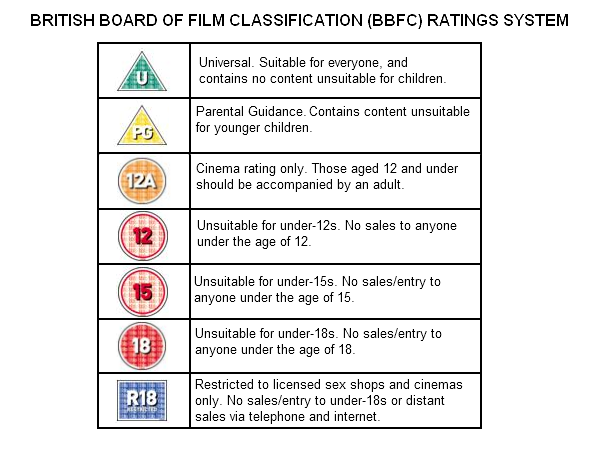
BBFC - British board of Film Classification
U -
Discrimination
Discriminatory language or behaviour is unlikely to be acceptable unless clearly disapproved of.
Drugs
References to illegal drugs or drug misuse must be infrequent and innocuous, or have a clear educational purpose or anti-drug message suitable for young children.
Imitable behaviour
Potentially dangerous or anti-social behaviour which young children may copy must be clearly disapproved of. No emphasis on realistic or easily accessible weapons.
Language
Infrequent use only of very mild bad language.
Nudity
Occasional nudity, with no sexual context.
Sex
Only very mild sexual behaviour (for example, kissing) and references to such behaviour.
Threat
Scary or potentially unsettling sequences should be mild, brief and unlikely to cause undue anxiety to young children. The outcome should be reassuring.
Violence
Violence will generally be very mild. Mild violence may be acceptable if it is justified by context (for example, comedic, animated, wholly unrealistic).
PG-
Discrimination
Discriminatory language or behaviour is unlikely to be acceptable unless clearly disapproved of, or in an educational or historical context, or in a particularly dated work with no likely appeal to children. Discrimination by a character with whom children can readily identify is unlikely to be acceptable.
Drugs
References to illegal drugs or drug misuse must be innocuous or carry a suitable anti-drug message.
Imitable behaviour
No detail of potentially dangerous behaviour which young children are likely to copy, if that behaviour is presented as safe or fun. No glamorisation of realistic or easily accessible weapons such as knives. No focus on anti-social behaviour which young children are likely to copy
Language
Mild bad language only. Aggressive or very frequent use of mild bad language may result in a work being passed at a higher category.
Nudity
There may be nudity with no sexual context
Sex
Sexual activity may be implied, but should be discreet and infrequent. Mild sex references and innuendo only
Threat
Frightening sequences or situations where characters are in danger should not be prolonged or intense. Fantasy settings may be a mitigating factor.
Violence
Violence will usually be mild. However there may be moderate violence, without detail, if justified by its context (for example, history, comedy or fantasy).
12A -
Discrimination
Discriminatory language or behaviour must not be endorsed by the work as a whole. Aggressive discriminatory language or behaviour is unlikely to be acceptable unless clearly condemned.
Drugs
Misuse of drugs must be infrequent and should not be glamorised or give instructional detail.
Imitable behaviour
No promotion of potentially dangerous behaviour which children are likely to copy. No glamorisation of realistic or easily accessible weapons such as knives. No endorsement of anti-social behaviour.
Language
There may be moderate language. Strong language may be permitted, depending on the manner in which it is used, who is using the language, its frequency within the work as a whole and any special contextual justification.
Nudity
There may be nudity, but in a sexual context it must be brief and discreet.
Sex
Sexual activity may be briefly and discreetly portrayed. Moderate sex references are permitted, but frequent crude references are unlikely to be acceptable.
Threat
There may be moderate physical and psychological threat and horror sequences. Although some scenes may be disturbing, the overall tone should not be. Horror sequences should not be frequent or sustained.
Violence
There may be moderate violence but it should not dwell on detail. There should be no emphasis on injuries or blood, but occasional gory moments may be permitted if justified by the context. Sexual violence may only be implied or briefly and discreetly indicated, and its depiction must be justified by context
15 -
Discrimination
The work as a whole must not endorse discriminatory language or behaviour, although there may be racist, homophobic or other discriminatory themes and language.
Drugs
Drug taking may be shown but the work as a whole must not promote or encourage drug misuse (for example, through instructional detail). The misuse of easily accessible and highly dangerous substances (for example, aerosols or solvents) is unlikely to be acceptable.
Imitable behaviour
Dangerous behaviour (for example, hanging, suicide and self-harming) should not dwell on detail which could be copied. Whether the depiction of easily accessible weapons is acceptable will depend on factors such as realism, context and setting
Language
There may be strong language. Very strong language may be permitted, depending on the manner in which it is used, who is using the language, its frequency within the work as a whole and any special contextual justification.
Nudity
There are no constraints on nudity in a non-sexual or educational context. There may be nudity in a sexual context but usually without strong detail.
Sex
Sexual activity may be portrayed, but usually without strong detail. There may be strong verbal references to sexual behaviour, but the strongest references are unlikely to be acceptable unless justified by context. Works whose primary purpose is sexual arousal or stimulation are unlikely to be acceptable.
Threat
There may be strong threat and horror. A sustained focus on sadistic or sexual threat is unlikely to be acceptable.
Violence
Violence may be strong but should not dwell on the infliction of pain or injury. The strongest gory images are unlikely to be acceptable. Strong sadistic violence is also unlikely to be acceptable. There may be detailed verbal references to sexual violence but the depiction of sexual violence must be discreet and justified by context.
18 -
• where the material is in breach of the criminal law, or has been created through the commission of a criminal offence
• where material or treatment appears to us to risk harm to individuals or, through their behaviour, to society. For example, the detailed portrayal of violent or dangerous acts, or of illegal drug use, which may cause harm to public health or morals. This may include portrayals of sadistic or sexual violence which make this violence look appealing; reinforce the suggestion that victims enjoy sexual violence; or which invite viewer complicity in sexual violence or other harmful violent activities
• where there are more explicit images of sexual activity in the context of a sex work (see below) or where the primary purpose of the images in question is sexual arousal In the case of video works, which may be more accessible to younger viewers, intervention may be more frequent than for cinema films.
Sex education at 18
Where sex material genuinely seeks to inform and educate in matters such as human sexuality or safer sex and health, explicit images of sexual activity may be permitted.
Sex works at 18
Sex works are works whose primary purpose is sexual arousal or stimulation. Sex works containing only material which may be simulated are generally passed 18. Sex works containing clear images of real sex, strong fetish material, sexually explicit animated images, or other very strong sexual images will be confined to the R18 category. Material which is unacceptable in a sex work at R18 is also unacceptable in a sex work at 18.
IPSO - Independent press organisation
The IPSO classify newspapers and magazines, They have a large amount of influence due to the large influx of newspapers
They classify based off of a ruling named the editors code. The editors code is broken down into multiple different headings
OFCOM
Discrimination
Discriminatory language or behaviour is unlikely to be acceptable unless clearly disapproved of.
Drugs
References to illegal drugs or drug misuse must be infrequent and innocuous, or have a clear educational purpose or anti-drug message suitable for young children.
Imitable behaviour
Potentially dangerous or anti-social behaviour which young children may copy must be clearly disapproved of. No emphasis on realistic or easily accessible weapons.
Language
Infrequent use only of very mild bad language.
Nudity
Occasional nudity, with no sexual context.
Sex
Only very mild sexual behaviour (for example, kissing) and references to such behaviour.
Threat
Scary or potentially unsettling sequences should be mild, brief and unlikely to cause undue anxiety to young children. The outcome should be reassuring.
Violence
Violence will generally be very mild. Mild violence may be acceptable if it is justified by context (for example, comedic, animated, wholly unrealistic).
PG-
Discrimination
Discriminatory language or behaviour is unlikely to be acceptable unless clearly disapproved of, or in an educational or historical context, or in a particularly dated work with no likely appeal to children. Discrimination by a character with whom children can readily identify is unlikely to be acceptable.
Drugs
References to illegal drugs or drug misuse must be innocuous or carry a suitable anti-drug message.
Imitable behaviour
No detail of potentially dangerous behaviour which young children are likely to copy, if that behaviour is presented as safe or fun. No glamorisation of realistic or easily accessible weapons such as knives. No focus on anti-social behaviour which young children are likely to copy
Language
Mild bad language only. Aggressive or very frequent use of mild bad language may result in a work being passed at a higher category.
Nudity
There may be nudity with no sexual context
Sex
Sexual activity may be implied, but should be discreet and infrequent. Mild sex references and innuendo only
Threat
Frightening sequences or situations where characters are in danger should not be prolonged or intense. Fantasy settings may be a mitigating factor.
Violence
Violence will usually be mild. However there may be moderate violence, without detail, if justified by its context (for example, history, comedy or fantasy).
12A -
Discrimination
Discriminatory language or behaviour must not be endorsed by the work as a whole. Aggressive discriminatory language or behaviour is unlikely to be acceptable unless clearly condemned.
Drugs
Misuse of drugs must be infrequent and should not be glamorised or give instructional detail.
Imitable behaviour
No promotion of potentially dangerous behaviour which children are likely to copy. No glamorisation of realistic or easily accessible weapons such as knives. No endorsement of anti-social behaviour.
Language
There may be moderate language. Strong language may be permitted, depending on the manner in which it is used, who is using the language, its frequency within the work as a whole and any special contextual justification.
Nudity
There may be nudity, but in a sexual context it must be brief and discreet.
Sex
Sexual activity may be briefly and discreetly portrayed. Moderate sex references are permitted, but frequent crude references are unlikely to be acceptable.
Threat
There may be moderate physical and psychological threat and horror sequences. Although some scenes may be disturbing, the overall tone should not be. Horror sequences should not be frequent or sustained.
Violence
There may be moderate violence but it should not dwell on detail. There should be no emphasis on injuries or blood, but occasional gory moments may be permitted if justified by the context. Sexual violence may only be implied or briefly and discreetly indicated, and its depiction must be justified by context
15 -
Discrimination
The work as a whole must not endorse discriminatory language or behaviour, although there may be racist, homophobic or other discriminatory themes and language.
Drugs
Drug taking may be shown but the work as a whole must not promote or encourage drug misuse (for example, through instructional detail). The misuse of easily accessible and highly dangerous substances (for example, aerosols or solvents) is unlikely to be acceptable.
Imitable behaviour
Dangerous behaviour (for example, hanging, suicide and self-harming) should not dwell on detail which could be copied. Whether the depiction of easily accessible weapons is acceptable will depend on factors such as realism, context and setting
Language
There may be strong language. Very strong language may be permitted, depending on the manner in which it is used, who is using the language, its frequency within the work as a whole and any special contextual justification.
Nudity
There are no constraints on nudity in a non-sexual or educational context. There may be nudity in a sexual context but usually without strong detail.
Sex
Sexual activity may be portrayed, but usually without strong detail. There may be strong verbal references to sexual behaviour, but the strongest references are unlikely to be acceptable unless justified by context. Works whose primary purpose is sexual arousal or stimulation are unlikely to be acceptable.
Threat
There may be strong threat and horror. A sustained focus on sadistic or sexual threat is unlikely to be acceptable.
Violence
Violence may be strong but should not dwell on the infliction of pain or injury. The strongest gory images are unlikely to be acceptable. Strong sadistic violence is also unlikely to be acceptable. There may be detailed verbal references to sexual violence but the depiction of sexual violence must be discreet and justified by context.
18 -
• where the material is in breach of the criminal law, or has been created through the commission of a criminal offence
• where material or treatment appears to us to risk harm to individuals or, through their behaviour, to society. For example, the detailed portrayal of violent or dangerous acts, or of illegal drug use, which may cause harm to public health or morals. This may include portrayals of sadistic or sexual violence which make this violence look appealing; reinforce the suggestion that victims enjoy sexual violence; or which invite viewer complicity in sexual violence or other harmful violent activities
• where there are more explicit images of sexual activity in the context of a sex work (see below) or where the primary purpose of the images in question is sexual arousal In the case of video works, which may be more accessible to younger viewers, intervention may be more frequent than for cinema films.
Sex education at 18
Where sex material genuinely seeks to inform and educate in matters such as human sexuality or safer sex and health, explicit images of sexual activity may be permitted.
Sex works at 18
Sex works are works whose primary purpose is sexual arousal or stimulation. Sex works containing only material which may be simulated are generally passed 18. Sex works containing clear images of real sex, strong fetish material, sexually explicit animated images, or other very strong sexual images will be confined to the R18 category. Material which is unacceptable in a sex work at R18 is also unacceptable in a sex work at 18.
IPSO - Independent press organisation
The IPSO classify newspapers and magazines, They have a large amount of influence due to the large influx of newspapers
They classify based off of a ruling named the editors code. The editors code is broken down into multiple different headings
- § Accuracy
- § Privacy
- § Harassment
- § Intrusion into grief or shock
- § Reporting Suicide
- § Children
- § Children in sex cases
- § Hospitals
- § Reporting of Crime
- § Clandestine devices and subterfuge
- § Victims of sexual assault
- § Discrimination
- § Financial journalism
- § Confidential sources
- § Witness payments in criminal trials
- § Payments to criminals
- § The Public Interest
About
the Editors' Code
§ The Editors’ Code of Practice sets out the rules that newspapers and
magazines regulated by IPSO have agreed to follow.
§ The Code is written and administered by the Editors’ Code Committee and
enforced by IPSO.
§ The
latest version of the Editors’ Code of Practice came into effect on 1 January
2016.
The Code
The Code – including this preamble and the public interest exceptions
below – sets the framework for the highest professional standards that members
of the press subscribing to the Independent Press Standards Organisation have
undertaken to maintain. It is the cornerstone of the system of voluntary
self-regulation to which they have made a binding contractual commitment. It
balances both the rights of the individual and the public's right
to know.
To achieve that balance, it is essential that an agreed Code be honoured
not only to the letter, but in the full spirit. It should be interpreted
neither so narrowly as to compromise its commitment to respect the rights of
the individual, nor so broadly that it infringes the fundamental right to
freedom of expression – such as to inform, to be partisan, to challenge, shock,
be satirical and to entertain – or prevents publication in the public interest.
It is the responsibility of editors and publishers to apply the Code to
editorial material in both printed and online versions of their publications.
They should take care to ensure it is observed rigorously by all editorial
staff and external contributors, including non-journalists.
Editors must maintain in-house procedures to resolve complaints swiftly
and, where required to do so, co- operate with IPSO. A publication subject to
an adverse adjudication must publish it in full and with due prominence, as
required by IPSO.
1.
Accuracy
i) The Press must take care not to publish inaccurate, misleading or
distorted information or images, including headlines not supported by the text.
ii) A significant inaccuracy, misleading statement or distortion must be
corrected, promptly and with due prominence, and — where appropriate — an
apology published. In cases involving IPSO, due prominence should be as
required by the regulator.
iii) A fair opportunity to reply to significant inaccuracies should be
given, when reasonably called for.
iv) The Press, while free to editorialise and campaign, must distinguish
clearly between comment, conjecture and fact.
v) A publication must report fairly and accurately the outcome of an
action for defamation to which it has been a party, unless an agreed settlement
states otherwise, or an agreed statement is published.
2.
*Privacy
i) Everyone is entitled to respect for his or her private and family
life, home, health and correspondence, including digital communications.
ii) Editors will be expected to justify intrusions into any individual's
private life without consent. Account will be taken of the complainant's own
public disclosures of information.
iii) It is unacceptable to photograph individuals, without their
consent, in public or private places where there is a reasonable expectation of
privacy.
3.
*Harassment
i) Journalists must not engage in intimidation, harassment or persistent
pursuit.
ii) They must not persist in questioning, telephoning, pursuing or
photographing individuals once asked to desist; nor remain on property when
asked to leave and must not follow them. If requested, they must identify
themselves and whom they represent.
iii) Editors must ensure these principles are observed by those
working for them and take care not to use non-compliant material from other
sources.
4.
Intrusion into grief or shock
In cases involving personal grief or shock, enquiries and approaches
must be made with sympathy and discretion and publication handled sensitively.
These provisions should not restrict the right to report legal proceedings.
5.
*Reporting Suicide
When reporting suicide, to prevent simulative acts care should be taken
to avoid excessive detail of the method used, while taking into account the
media's right to report legal proceedings.
6.
*Children
i) All pupils should be free to complete their time at school without
unnecessary intrusion.
ii) They must not be approached or photographed at school without
permission of the school authorities.
iii) Children under 16 must not be interviewed or photographed on issues
involving their own or another child’s welfare unless a custodial parent or
similarly responsible adult consents.
iv) Children under 16 must not be paid for material involving their
welfare, nor parents or guardians for material about their children or wards,
unless it is clearly in the child's interest.
v) Editors must not use the fame, notoriety or position of a parent or
guardian as sole justification for publishing details of a child's private
life.
7.
*Children in sex cases
The press must not, even if legally free to do so, identify children
under 16 who are victims or witnesses in cases involving sex offences.
In any press report of a case involving a sexual offence against a child
-
i) The child must not be identified.
ii) The adult may be identified.
iii) The word "incest" must not be used where a child victim
might be identified.
iv) Care must be taken that nothing in the report implies the
relationship between the accused and the child.
8.
*Hospitals
i) Journalists must identify themselves and obtain permission from a
responsible executive before entering non-public areas of hospitals or similar
institutions to pursue enquiries.
ii) The restrictions on intruding into privacy are particularly relevant
to enquiries about individuals in hospitals or similar institutions.
9.
*Reporting of Crime
i) Relatives or friends of persons convicted or accused of crime should
not generally be identified without their consent, unless they are genuinely
relevant to the story.
ii) Particular regard should be paid to the potentially vulnerable
position of children who witness, or are victims of, crime. This should not
restrict the right to report legal proceedings.
10.
*Clandestine devices and subterfuge
i) The press must not seek to obtain or publish material acquired by
using hidden cameras or clandestine listening devices; or by intercepting
private or mobile telephone calls, messages or emails; or by the unauthorised
removal of documents or photographs; or by accessing digitally-held information
without consent.
ii) Engaging in misrepresentation or subterfuge, including by agents or
intermediaries, can generally be justified only in the public interest and then
only when the material cannot be obtained by other means.
11.
Victims of sexual assault
The press must not identify victims of sexual assault or publish
material likely to contribute to such identification unless there is adequate
justification and they are legally free to do so.
12.
Discrimination
i) The press must avoid prejudicial or pejorative reference to an
individual's, race, colour, religion, sex, gender identity, sexual orientation
or to any physical or mental illness or disability.
ii) Details of an individual's race, colour, religion, gender identity,
sexual orientation, physical or mental illness or disability must be avoided
unless genuinely relevant to the story.
13. Financial
journalism
i) Even where the law does not prohibit it, journalists must not use for
their own profit financial information they receive in advance of its general
publication, nor should they pass such information to others.
ii) They must not write about shares or securities in whose performance
they know that they or their close families have a significant financial
interest without disclosing the interest to the editor or financial editor.
iii) They must not buy or sell, either directly or through nominees or
agents, shares or securities about which they have written recently or about
which they intend to write in the near future.
14.
Confidential sources
Journalists have a moral obligation to protect confidential sources of
information.
15.
Witness payments in criminal trials
i) No payment or offer of payment to a witness – or any person who may
reasonably be expected to be called as a witness – should be made in any case
once proceedings are active as defined by the Contempt of Court Act 1981. This
prohibition lasts until the suspect has been freed unconditionally by police
without charge or bail or the proceedings are otherwise discontinued; or has
entered a guilty plea to the court; or, in the event of a not guilty plea, the
court has announced its verdict.
*ii) Where proceedings are not yet active but are likely and
foreseeable, editors must not make or offer payment to any person who may
reasonably be expected to be called as a witness, unless the information
concerned ought demonstrably to be published in the public interest and there
is an over-riding need to make or promise payment for this to be
done; and all reasonable steps have been taken to ensure no financial
dealings influence the evidence those witnesses give. In no circumstances
should such payment be conditional on the outcome of a trial.
*iii) Any payment or offer of payment made to a person later cited to
give evidence in proceedings must be disclosed to the prosecution and defence.
The witness must be advised of this requirement.
16.
*Payment to criminals
i) Payment or offers of payment for stories, pictures or information,
which seek to exploit a particular crime or to glorify or glamorise crime in
general, must not be made directly or via agents to convicted or confessed
criminals or to their associates – who may include family, friends and
colleagues.
ii) Editors invoking the public interest to justify payment or offers
would need to demonstrate that there was good reason to believe the public
interest would be served. If, despite payment, no public interest emerged, then
the material should not be published.
The
Public Interest
There may be exceptions to the clauses marked * where they can be
demonstrated to be in the public interest.
1. The public interest includes, but is not confined to:
§ Detecting or exposing crime, or the threat of crime, or serious
impropriety.
§ Protecting public health or safety.
§ Protecting the public from being misled by an action or statement of an
individual or organisation.
§ Disclosing a person or organisation’s failure or likely failure to
comply with any obligation to which they are subject.
§ Disclosing a miscarriage of justice.
§ Raising or contributing to a matter of public debate, including serious
cases of impropriety, unethical conduct or incompetence concerning the public.
§ Disclosing concealment, or likely concealment, of any of the above.
2. There is a public interest in freedom of expression itself.
3. The regulator will consider the extent to which material is already
in the public domain or will become so.
4. Editors invoking the public interest will need to demonstrate that
they reasonably believed publication - or journalistic activity taken with a
view to publication – would both serve, and be proportionate to, the public
interest and explain how they reached that decision at the time.
5. An exceptional public interest would need to be demonstrated to
over-ride the normally paramount interests of children under 16.
OFCOM
Friday, 24 November 2017
Representation - Stuart Hall
representation means the way aspects of society and social identity are represented to audiences usually linking to:
These aspects of representation will change based on context E.G. Advert will have different representation to newspapers
There is About 3 Key themes in Stuart halls representation theory; He believes:
- Gender
- Age
- Ethnicity
These aspects of representation will change based on context E.G. Advert will have different representation to newspapers
There is About 3 Key themes in Stuart halls representation theory; He believes:
- representation is the way in which meanings are produced through the signs and codes that are a part of media language.
- stereotyping reduces people to a simple, recognizable characteristics
- stereotyping tends to occur where there are inequalities of power, for example minority groups in society may often be represented as 'other' and 'different'
Daily mirror analysis
The editors of this newspaper would have tried to evoke as much reaction as possible as to try and intrigue as many readers as possible about Brexit
The central image is of a blurred out David Cameron and a focused photo of his wife looking in distress as her husband has resigned from being PM the fact that Cameron is blurred out shows the fact that he is resigning and is leaving the picture sue to the Brexit vote outcome
The newspaper gave this story the strapline of "DAY ONE OF BREXIT BRITAIN" this is in capitals and very prominent in the corner of the newspaper trying to draw to the fact that the vote had happened by this point and that this is going to be the first set of news as to whats about to happen to Britain as we enter the first day of the new brexit Britain
The newspaper has a jumpline under the main headline " Inside full coverage of the day that shook the world" this is a very hyperbolic jump line as it is largely over exaggerated the fact that Britain left the EU didn't shake the world it may have shaken 49% of Britain population and some of the EU members however it probably wasn't the most important piece of news to countries such as Australia, Japan and the USA. By using this hyperbolic language the reader is incited to look at the shocking knowledge contained between the papers pages on how the entire world was shaken by our populations choice as citizens of the UK.
The headline itself is a very prominent and big question "So what the hell happens now?" this is a very big question probably asked by the majority of the politicians and the population itself with Cameron resigning and truths being revealed about all the 'promises' made for voting leave or stay the population didn't know what was happening as such a lot of people would be wondering whats going to happen the fact that this question is the headline means that readers will see this and believe that this newspaper will tell you whats going to happen, with the majority of the population wondering whats going to happen this headline draws in a very large audience of people wanting to know the answer to this question
This paper is a prime example of a front page splash meaning the front page is taken up by a very prominent photo which links to the story at hand this is a very large photo as despite not many people liking Cameron he was still the PM and the person who is in charge of the country (not really because specifically he is lead by the Lords and the lords are led by the queen which means we as a country are a monarchy not a democracy but besides the point) and with the PM resigning people don't really know whats going to happen making this a very telling photo it also has him blurred out and has his wife's face as the central image looking concerned and sad that her husband is resigning however most of the country would also be feeling concerned as they don't know whats really happening and they have no one to lead them anymore (Again really the Queen leads them but no matter)
Friday, 10 November 2017
Rupert Murdoch - News Corperation
News Corporation (officially referred to and trading as News Corp) is an American multinational mass media company, formed as a spin-off of the former News Corporation (as founded by Rupert Murdoch in 1979) focusing on newspapers and publishing. It is one of two companies which succeeded the former News Corporation, alongside 21st Century Fox—which consists of the old News Corporation's broadcasting and media properties, such as Fox Entertainment Group.
Murdoch is a republican
Newspapers that Murdoch owns: The Sun, The Times, The Sunday Times and The Sun on Sunday
The Sun is a tabloid newspaper published in the United Kingdom and Ireland. Since The Sun on Sunday was launched in February 2012, the paper has been a seven-day operation.
Murdoch found he had such a rapport with Larry Lamb over lunch that other potential recruits as editor were not interviewed and Lamb was appointed as the first editor of the new Sun. In January 1986 Murdoch shut down the Bouverie Street premises of The Sun and News of the World, and moved operations to the new Wapping complex in East London, substituting the electricians' union for the print unions as his production staff's representatives and greatly reducing the number of staff employed to print the papers; a year-long picket by sacked workers was eventually defeated. Murdoch bought the dying newspapers the sun in 1969 and changed the paper into a tabloid format and reduced print costs using the same printers. Murdoch later on got the ownership of the times as he had good connections with Lord Thomson who was tired of making a loss so he gave the company over to Murdoch in the hope that he could revive the newspaper. Phone hacking scandal Murdoch was involved in a big scandal in 2011 which he got in big trouble and loads of investigations of him and his son James with the phone hacking scandal. Employees of the newspaper were accused of engaging in phone hacking, police bribery, and exercising improper influence in the pursuit of stories. Whilst investigations conducted from 2005 to 2007 appeared to show that the paper's phone hacking activities were limited to celebrities. On July 2013 Exaro and Channel 4 news broke the story of a secretly recorded tape. The tape was recorded by Sun journalists and in it Murdoch can be heard telling them that the whole investigation was one big fuss over nothing, and that he, or his successors, would take care of any journalists who went to prison. History Sun before Murdoch in 1965 was actually a broadsheet newspaper. And in 1969 the sun was rumored to be losing $2M a year and having a circulation of 800,000 that year was the year was the year where Murdoch took over as IPC was rumored was rumored to sell the business to cut the losses. Sex was used as an important element in the content and marketing the paper from the start, which Lamb believed was the most important part of his readers' lives. The first topless Page 3 model appeared on 17 November 1970. A topless Page 3 model gradually became a regular fixture. Page 3 was finally terminated in 2015 in January after the sun defending it for 40 years which was the thing that the sun was most known for in their history. However the ‘page 3’ feature was gone the sun still do similar things with models in other pages but not so openly as before. Rupert Murdoch’s News Corp recorded an $817m (£629m) loss in the full 2017 financial year due to a fall in the value of its UK and Australian newspapers. Political view The sun are a right wing newspaper as they’ve supported conservative a number of times by supporting labour instead of conservative but they haven’t always gone with conservatives as they’ve gone with labour in the past and publicly said that they would support any able politician who would describe himself as a Social Democrat. However in 2009 they went back to supporting the conservatives and since then they’ve supported conservative ever since Politically, the Sun in the early Murdoch years remained nominally Labour-supporting. It advocated a vote for the Labour Party led by Harold Wilson in the 1970 General Election, with the headline "Why It Must Be Labour”, but by February 1974 it was calling for a vote for the Conservative Party led by Edward Heath while suggesting that it might support a Labour Party led by James Callaghan or Roy Jenkins. In the October election an editorial asserted: "ALL our instincts are left rather than right and we would vote for any able politician who would describe himself as a Social Democrat." In the 1975 referendum on Britain continuing membership of the European Economic Community, it advocated a vote to stay in the Common Market. Suns view on brexit. The sun endorsed the leave campaign in the brutish referendum urging all its readers to leave the EU. However this front cover was only for England and wales but for Northern Ireland and Scotland they had different covers 2009 the sun were not so clear of who they were supporting politically when the country was under Gordon Brown. However Murdoch built a relationship with conservative leader David Cameron so the sun started supporting the conservatives again and have been since 2009 but at the moment it’s a bit unclear with brexit Celebrities and controversy The sun started to use celebrities to make rumors about them. They were mostly pop stars and very famous including Elton john and most of the rumors where about sexual orientation. The Sun ran a series of false stories about the pop musician Elton John from 25 February 1987. They began with an invented account of the singer having sexual relationships with rent boys.
Wednesday, 8 November 2017
Tide analysis
we analysed the 1950's advert for Tide detergent which is renowned for its portrayal of women and the sexist nature of the advert we linked the advert with feminist theory
Tide 1950’s advert – analysis
Layout and Design: The advert is constructed with a large
image and a large headline the image is to the left and there is a lot of text
it has many pictures of the same woman
Central image: the central image is of a 1950’s house wife
hugging a box of tide. The woman is stereotypically dressed which communicates
that the product is designed for 1950’s white American housewives that want to
seem to be better in they’re role
Typography and Graphics: the advert uses standard 1950’s font
used in most adverts on the day. The main points of the advert are in a red
colour rather than the black text for the rest of it. The main title is also in
a sort of wavy diagonal which is more eye catching to people rather than a
straight line of text.
Visual codes: The advert its self is created using bright
and ‘happy’ colours which promote the feeling that if you buy the product you
will be happy. Coloured font makes words stand out to emphasise the “Cleanest”
“Brightest” and “Whitest” wash also highlights the word “Tide” in red to allow
you to remember the name of the brand
Colour: The colour scheme of the advert is
yellow, red, black and white. The box of the product is red which suggest why
some of the font is also red. The coloured font highlights that it is the
brightest whitest and cleanest. The advert is a hard sell advert as it promotes
all of the things the detergent does and emphasises it more.
Print technical codes: It has cartoon reels on the sides edited
in to help drill in the message of the product doing the job and making your
washing clean. The advert is lit brightly to emphasise that the product will
make your clothes bright and white.
Language and Mode of address: The advert uses the alliteration ‘What
women want’ to show that the product is for women and that all the women should
get the product. Uses explanation marks a lot to drill the point home.
Attitude and beliefs: It implies that women should be at
home washing and cleaning and that buying the product will allow you to have
the cleanest clothes in the world and be better than everyone else so the women
can please their husband.
Association: the comic strip may relate to how the
tv advert would look
Representation: The women in the tide commercial are
being given the stereotypical job of a housewife cleaner and forcing the tide
product to a woman central picture. Leisbet van Zoonan states that historical
bias has made us believe that women should be the housewife kind and stay at
home cleaning which is evident in this advert. Historically the 1950’s were a
very controversial time for the female gender during the beginning of the civil
rights movement nowadays you can look back at the adverts from these days and
90% of which will be predominantly sexist however back in the 1950’s this was
seen as normal and wouldn’t have been seen as controversially as today. If this
advert was published nowadays there would be a lot of argument about it as it
is portraying a very sexist view of women however in the 1950’s this was seen
as a normal thing to see around and wasn’t as controversial.
Tuesday, 7 November 2017
Soundscape
Story line
Construction site gas explosion
Sounds I will need
Atmospheric – construction site sounds, People screaming
Foley - none
Sound effects – Button click, Explosion, Gas leaking, fire, helicopter flying over
Dialogue - Wilhelm scream
Music – Explosions by Ellie Goulding, Highway to hell by AC/DC,
Danger zone Kevin Loggins
Friday, 13 October 2017
Claude Levi-Strauss - Narrative theory
In this lesson, we went over Levi Strauss' Narrative Theory and the idea of binary opposition. The idea that every item, object or word has its own binary opposite or complete opposite for instance gender Boy is the opposite to Girl.
Stuart halls reception thoery
Stuart Halls reception theory was created in 1980s and talks about how directors or journalists in the media create the media to give a specific meaning however people may perceive these in different ways
Numerous factors depend on audiences readings
Numerous factors depend on audiences readings
- Their Life experience
- Mood at time of viewing
- Their age
- Their Culture
- Their Belifs
- Their Gender
Camera shots
In this lesson, we went over different camera shots and how shots can be used to portray a feeling or to show us a characters emotion / a characters reaction
From closest to furthest the shots go;
From closest to furthest the shots go;
- Extreme close up

- Big close up

- Close up

- Medium close up

- Medium shot

- Medium long shot

- Long shot

- Establishing shot
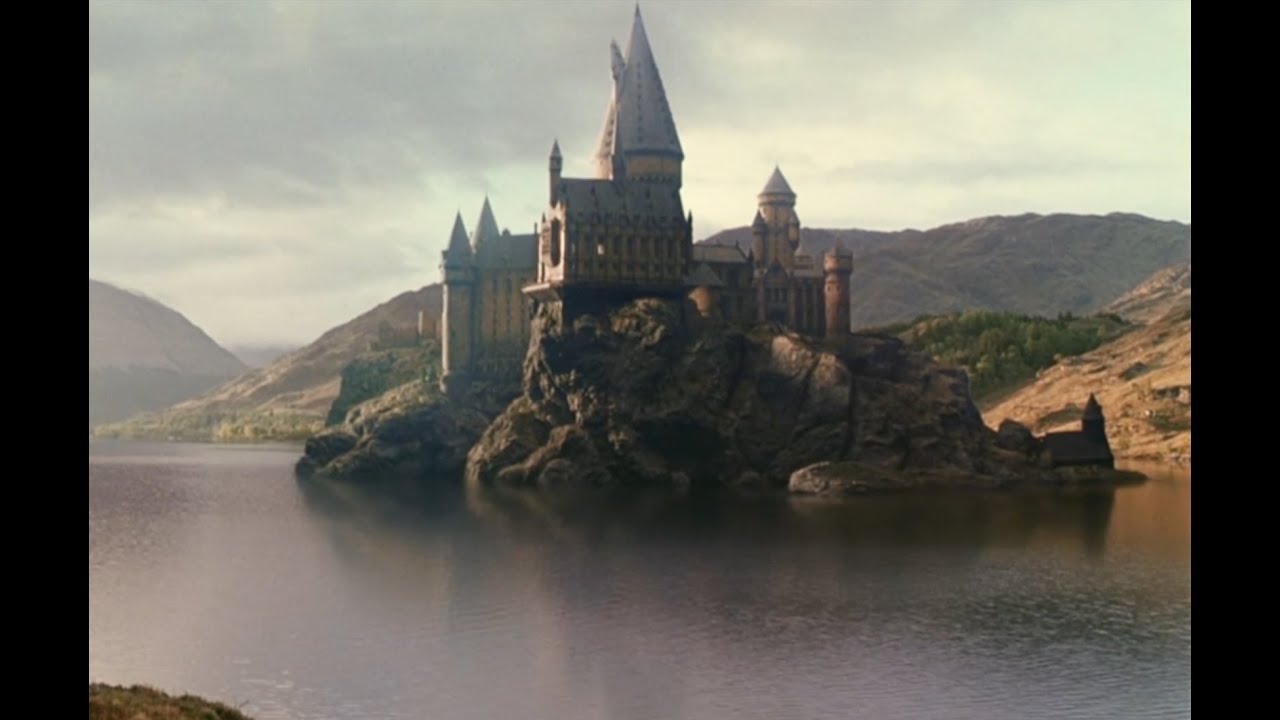
Camera Movement
in this lesson, we went over different types of camera movement and how there is usually two ways to do different types of camera movement one with a fixed camera and one with a moving camera. different types of movement include
- Pan (fixed camera moving horizontally)
- Crab (freely moving camera moving horizontally)
- Tilt (fixed camera moving From low angle to high angle or vice versa)
- Ped (freely moving camera moving vertically holding the same angle)
- Zoom (fixed camera zooms in on a point of interest along Z-axis)
- Track (freely moving camera moving towards something along Z-Axis)
We looked at various clips portraying different uses of the camera movement shots and showed how different shots were used more than others to portray different emotions.
In this scene from superman returns they use a extremely slow track to emphasize the rising tension throughout the scene and conversation
We then looked at the Bourne identity fight scene to show how a handheld camera with a lot of tracking shots helps the audience become part of the movie itself
We looked at the 'Get out of the water' scene from jaws in which Spielberg tracks in with the camera while zooming out this kept the central picture the same while distorting the field of view to portray a perplexed feeling making the audience feel like somethings wrong
after this we decided to look at the book of eli hijackers scene to show how camera movement can be used to portray a heightening level of tension throughout a sinister feeling.
We compared the 'Book of Eli' to a scene from an old star trek episode which used a static camera and a lot of zooms with a really slow paced fight scene and all the types of camera movement used make the scene very boring and feel extremely unrealistic and artificial not bringing the audience in and heightening their tension
we watched a clip from 'Moonrise kingdom' by Wes Anderson who uses a crab shot for the entire scene and all scene progression is moving to the right.
Tuesday, 3 October 2017
Camera angles
In this lesson, we watched a the bank heist scene (Bullet stopper) from superman returns in order to find practical examples of directors using camera shots to convey specific opinions of characters and who is in charge in scenes. Its very prominent in this scene using various close ups to establish emotions, using low angle shots to establish power in the scene and high angle shots to establish the opposite effect, the weakness and vulnerability of characters.
We also looked over different camera angles and how they can tell you about the characters in the scene and the movie itself
The different angles are;
- High angle shot (to show people in a vulnerable position)
- Low angle shots (to show people in a superior and more powerful position)
- Birds eye view
- Dutch angle (to suggest something about the scene queer)
- Eye level shot (equilibrium with a character)
- Reverse angle shot (to show a characters emotions to something then show what they see)
Friday, 29 September 2017
Friday, 15 September 2017
Representation - Representation of gender bias in newspapers
In today's lesson we covered the different representation of both genders shown in The Sun newspaper. we watched a video in which a group of people collected The Sun newspaper for 6 months and cut out every picture of a man and every picture of a women from the newspaper the stuck the photos onto a wall and it was evident there was a large gender bias. virtually all photos of men were sporting photos showing real emotions with a range of emotion, all photos of women seemed fake, staged and posed showing very little emotion between photos most photos of women sexualised them the only photos not sexualising women were of the queen or Mrs Brown and other prime political figures.
The video perfectly showed the extreme gender bias in the modern media taking a heavily sport orientated newspaper and showing that throughout all 6 months the newspaper only portrayed mens sports. Not a single picture of a woman playing sport was shown. the creator of the video even states how the side of the wall showing males felt like real life whereas the female side all seemed fake and manufactured. In a modern day society where women are trying to fight the media and its portrayal of them as sexual objects this video stands as large proof that the UK's biggest newspaper is even portraying females like this.
My view:
As of now I believe that there is a large gender bias shown in mainstream media its shown very prominently across all forms of media. Its a very old fashioned view and I believe that newspapers are following on from predecessors its not doing much differently from how everything was represented back when The Sun was first made when men were believed to be the dominant and women were forced to do as the male said. This is a very old fashioned view and should be eradicated to keep up with modern times now where women are being given equal opportunities in jobs and sport. This video really brings to light the mass amount of bias as we are slowly shown these pictures over a day to day basis and often it doesn't occur how much the media is orientated to men but when newspapers are shown from a range of time all at once the sheer bias shows immediately.
Subscribe to:
Posts (Atom)